CAREER OPTIONS
Showing posts with label Science. Show all posts

Tuesday, 4 April 2017

Agricultural Science


Agricultural Science


Introduction:

Agriculture is the production of food and other goods by systematic and controlled growing of plants and living organisms. Agriculture industry plays a major role in the Indian economic scenario contributing around 20% of Gross Domestic product (GDP). Around 62% of the Indian population depend on it for their livelihood. The field of agriculture include farm management, horticulture, businesses and industries that manufacture agricultural machinery, industries that buy and process farm products, banking activities for financing and developing farms, research for improving quantity and quality of farm products and so on. Nowadays, the state of agriculture has improved a lot and has become highly scientific, sophisticated and mechanized. Only a small percentage in this field are engaged in traditional farming occupation. The vast majority work as either agricultural professionals/ scientists or in business related careers, such as marketing and merchandising.

Eligibility & Course Areas:

Ø  The basic eligibility criteria for B.Sc Agriculture Science is 10+2 or equivalent with science subjects with a minimum 50% marks. Duration of the course is 4 years and the admission to most of the institutions is based on merit or performance in the entrance examination conducted by the concerned institute/ university or on the basis of marks obtained in the ICAR Examination. 
Ø  B.Sc or B.Tech degree in relevant subject is needed for the 2 year Master's degree programmed. In M.Sc. Agriculture science several specialization are offered in the branches like agronomy, plant physiology, nematology, seed technology, soil science and soil conservation, sericulture, animal husbandry and dairy, horticulture, water conservation, farming system management, agricultural botany, agricultural biotechnology, agricultural chemistry, agricultural Economics, agricultural marketing management and so on.
Ø  For the 3 years Ph.D, one needs to have post graduate degree like M.Sc or M.Tech in related field. Almost all the agricultural universities provide Ph.D degree in different disciplines. Several institutes offer P.G Diploma courses in agriculture and those having a bachelors degree with an extensive knowledge base in agricultural science can opt for these courses. 

Job Prospects & Career Options:

Agricultural science professionals/ scientists are concerned with methods of converting agricultural commodities into healthy food products for consumers. They combine wide variety of scientific disciplines such as biology, chemistry, physics and mathematics to improve agricultural production methods and food quality. The tasks carried out by them depend on the type of specialization. Among the various specializations within agricultural science, the major broad areas are food science, plant science, soil science and animal science.
Ø Food Science
Ø Plant Science or Horticulture
Ø Soil Science
Ø Animal Other fields of agricultural science are agricultural economics; waste management; environmental science, ecology; agricultural engineering, biosystems engineering; biotechnology; genetic engineering; microbiology, etc. 

Remuneration:

Ø  Pay scale in the field of agriculture science depends mainly upon the academic qualification, institute or university from which the degree is attained, work experience and the skill of the employee. In the government sector, a fresh graduate can earn a monthly remuneration of Rs. 9000/-. With in a few years of service it can increase up to Rs. 20000/-. Candidates employed in private sector can get handsome salary apart from other benefits as fixed by the respective firm/company.

Ø  Agricultural scientists can receive a monthly salary ranges between Rs.18, 000 and 25, 000/- and a lecturer at the initial stage can earn an amount of Rs 15,000-18,000 per month.


Courses:

 » B.Sc. Agriculture
 » 
B.Sc. Agriculture (Hons.)
 » 
M.Sc. Agricultural Biochemistry
 » 
M.Sc. Agricultural Biotechnology
 » 
M.Sc. Agricultural Economics
 » 
M.Sc. Agricultural Engineering
 » 
M.Sc. Agricultural Extension
 » 
M.Sc. Agricultural Meteorology
» M.Sc. Agriculture
 » 
M.Sc. Dairy Technology and Agricultural Extension
 » 
M.Sc. Soil Science and Agricultural Chemistry
 » 
M.Tech. Agricultural Water Management
 » 
Ph.D. Agricultural Economics 
 » 
Post Graduate Diploma in Agricultural Business Management (PGDABM)
 » 
Post Graduate Diploma in Agricultural Extension Management (PGDAEM)
 » 
Post Graduate Diploma in Agricultural Marketing Management (PGDAMM)
 » 
Post Graduate Diploma in Agricultural Water Management
 »  Agricultural Research


Monday, 3 April 2017

Actuarial Science


Actuarial Science


INTRODUCTION:


You must have seen, heard and read about companies which provide insurance cover to policy holders in case of any eventuality like accidents, hospitalisation, household hazards, thefts or death and still others who look after investment schemes, employee benefits, retirement benefits and pension schemes. The policy holders are required to pay a fixed amount as instalments at regular intervals and they get this money back in the event of any untoward incident or upon the maturity of the policy. Have you ever wondered who decides as to what amount of money a policy holder should pay as premium or what sum should be given as pension amount or returns by the company.


Well, this exactly is what an actuary does. They calculate insurance risks and premiums. Technically speaking the job of an actuary is to assess the financial impact of an uncertain future event. Roughly speaking they look at the financial aspect of disasters; sarcastically speaking they are financial astrologers.


An actuary has to combine the skills of a statistician, economist and financier and employ techniques of probability, compound interest, law, marketing, management etc to predict the outcome of future contingencies and design solutions to lessen the financial severity of such events. 


To become an actuary one must be a Fellow of a recognised professional examining body like the Actuarial Society of India (ASI), Mumbai or the Institute of Actuaries, London. The work of an actuary involves a lot of number crunching and the nature of work is quite tedious, nevertheless it offers rewards in terms of intellectual challenge, status, job satisfaction and earnings. As their judgement is the basis of decision making for many business activities, their career paths often lead to upper management and executive positions.

ELIGIBILITY:


Any person with minimum 18 years of age and having a high degree of aptitude for mathematics and statistics can take up the course and become an Actuary. Courses available include Post graduate diploma in Actuarial Science, MSc. in Actuarial science etc.

A person is eligible to be considered for admission as a student member if he/she satisfies one of the following criteria.

  1. Should have passed 10+2(HSC) or equivalent with at least 85% in Mathematics/ Statistics
  2. Graduates or Post Graduate with not less than 55% marks in Mathematical subjects (i.e Mathematics or any of its branches; Statistics or any of its sub classifications such as Mathematical Statistics and Applied Statistics; Econometric; Computer Sciences; Any discipline of Engineering; Subject in Science such as Physics or its branches).
  3. Candidates with CA/ CS/ CWA/ MBA (Finance)/ PGDBA
  4. Fully qualified members of professional bodies such as the Institute of Chartered Accountants of India (ICAI), The institute of Cost and Works Accountants of India (ICWAI) and Certified institute of Financial Analysts of India (IFAI) and Fellow of Insurance Institute of India (III)- passing with the subjects Mathematical Basis of Insurance and Statistic
  5. A student member of actuarial bodies such as Institute of Actuaries, London; Faculty of Actuaries in Scotland and Institute of Actuaries, Australia
  6. Students from Society of Actuaries, USA and Casualty Actuarial society, USA , provided that they must have passed at least one subject from these bodies. 

Course Areas:

Students must take 15 subjects (14+1 optional) in preparing for the actuarial examinations. These subjects are grouped into 100 Series (CT), 200 Series (CA), 300 Series (ST) and 400 Series (SA). 
The subjects in CT Series cover Mathematical, statistical, economic and financial techniques, which are applicable internationally. The CA series contains a question of general actuarial interest and aims to test communication skills of the students with regard to application of actuarial technique learnt in the CT Series subject. The ST Series cover investment, Life-Insurance, General Insurance and Pensions and other Employee benefits. The SA Series subjects focus on the practical application of the Principles covered in the corresponding ST Series subjects and earlier subjects.
There are 9 Subjects in CT series, 3 subjects in CA series, 6 subjects in ST series out of which the student will chose 2 subjects and 6 subjects in SA series out of which the student will chose 1 subject.

CT series (Core Technical Stage)
CT1 - Financial Mathematics
CT2 - Finance and Financial Reporting
CT3 - Probability and Mathematical Statistics
CT4 - Models
CT5 - General Insurance, Life and Health Contingencies
CT6 - Statistical Methods
CT7 - Economics
CT8 - Financial Economics
CT9-Business Awareness Module

CA series (Core Applications Concepts)
CA1-Core Applications concepts consisting of assets and liabilities
CA2-Modelling,CA3-Communications

ST series (Specialist Technical Stage)
ST1-Health & care Insurnce
ST2-Life Insurance
ST3-General Insurance
ST4-Pension & other employee benefit
ST5-Finance & Investment A
ST6-Finance and Investment B

SA series (Specialist Application Stage)
SA1-Health & Care
SA2-Life Insurance
SA3-General Insurance
SA4-Pension & other Employee Benefit
SA5-Finance
SA6-Investment

Certificates in Actuarial Techniques
A student member becomes eligible to get the Certificate in Actuarial Techniques (CAT) on passing all the CT Series subjects.

Associate ship - A student on passing all the subjects up to and including ST Series becomes eligible to be admitted as an Associate Member of the society and can use AASI against his/her name as a registered actuary.

Fellowship - A student on passing all the subjects up to and including SA Series and upon satisfying the other criteria specified for the purpose becomes eligible to be admitted as fellow member of the Society and can use FASI against his/her name as a recognized fellow.

Duration:
There is no fixed duration to complete the course. The aspirant has to clear the Entrance Examination and the 15 subjects prescribed. A student can attempt any number of subjects at a time and in any order. However, it is a better option to take the subjects in the numerical sequence in which these are numbered and not more than two or three at a time.

PERSONAL SKILLS:
A person with a high degree of aptitude for mathematics and statistics can become an actuary. The other necessary skills include good communication skills, ability to use computers and related technology, business sense, a practical outlook, a curious bent of mind, the ability to work on ones own and also be a team player as the situation demands and to be self-motivated. However an aspirant should have single minded devotion, total dedication and a systematic approach towards problems in order to successfully complete the various stages of the course and be registered as a fellow.

JOB PROSPECTS & CAREER OPTIONS:


Ø Traditionally actuaries have been associated with insurance sector but in present scenario with the economy opening up actuaries are needed in sectors like non-life insurance, employee benefits, health insurance, asset-management, reinsurance, insurance broking houses and consulting companies.
Ø The job of an actuary involves formulating policies and calculating the premium to be charged. For this they assemble and analyse data to estimate the probability of such eventualities as death, sickness, injury, disability and property loss and formulate a sum which is advantageous to the customer as well as the company.
Ø In areas where employee benefits and retirement/ pension schemes are dealt, the actuaries have to calculate the amount of money to be paid as contribution to pension fund in order to generate a certain income level post-retirement.
Ø Actuaries in administrative positions have to explain technical matters to executives, government officials, shareholders, policyholders. Actuaries working in tandem with government/ government agencies are responsible for designing social security and Medicare plans.
Ø Many of these professionals work as independent consultants providing actuarial advice to clients for a fee. Some also provide investment advice. Actuaries have scope for career growth not only in India but also in countries like USA, UK, Canada and Australia where they already have the necessary infrastructure and support system available.

REMUNERATION:


Ø If you can survive the grilling tests, there is a payoff - the median annual salary for an actuary is handsome. Actuaries are globally in demand and can command hefty pay packets, salaries and perks. No wonder then that this profession has been rated among the best jobs in the US.
Ø In India the trend is slowly picking up. Stipend for an actuarial trainee per month in India is around Rs 25,000 per month.
Ø Insurance companies and consulting firms give merit to experience and qualifications with salary packets ranging from 8 lacs per annum for beginners to around 40 lacs per annum for those in senior positions. In UK a qualified actuary can earn 20 lacs per annum.

COURSES

» B.Sc. Actuarial Science 
» M.B.A. Actuarial Science
» M.Sc. Actuarial Science 
» Post Graduate Diploma in Actuarial Science (PGDAS)
» Training in Actuarial Science

Thursday, 23 March 2017

Physics

Physics

Introduction:

Physics, the mother of all sciences, engineering and technology, is the study of energy and the behavior of single atoms and their component pieces. It is the framework on which every other science is built. The subject helps us to understand the nature of the universe and how the physical properties of matter relate to one another by formulating theories and experiments. It opens up vistas in engineering, technology, architecture, medicine, veterinary, agriculture and other allied science streams.

Nature of Work:

There are two types of options for students pursuing a Bachelor of Science degree in physics. i.e. the professional option and the applied option. The professional option is intended for students who after graduate study, further advance their career field by pursuing a doctoral degree and opt to work in industrial or government research and development laboratories, or in teaching institutions. The applied option is intended for students who plan to pursue a technical career in physics or other technical areas, usually without further study. Most of the Physics graduates are employed in diverse industrial fields, only a minority use their physics knowledge as part of their work.

Personality:
         
They must be able to communicate ideas clearly. Physicists must have curiosity and imagination. Physicists need technical knowledge as they use technological tools, especially computers to perform their measurements and analysis of scientific data.

Professional Courses:

Those who have an interest in physics as a career can take up science stream which includes mathematics for plus two and go for further advancement with specialisation in the field. There are two types of options for students pursuing a Bachelor of Science degree in physics. i.e. the professional option and the applied option.

Duration:
12+3+2 yrs

Eligibility:
For a Bachelor Degree one must have plus two with science and mathematics. Those having bachelor degree in Physics can go for Post graduation. One can further advance in the field by taking Ph.D.

Career Prospects /Companies:
The professional option is intended for students who after graduate study, further advance their career field by pursuing a doctoral degree and opt to work in industrial or government research and development laboratories, or in teaching institutions

Remuneration:
Average Particle Physicist Yearly Salary in the United States. Particle Physicists earn a median salary of $110,110 per year. Salaries typically start from $55,150 and go up to $181,840. Learn more about the Particle Physicist job market for salaries of real jobs in your area.

Job Title:
Assistant Professor, Postsecondary / Higher Education 2 salaries
Salary:
Rs 615,000


Paleontology


Paleontology

Introduction:

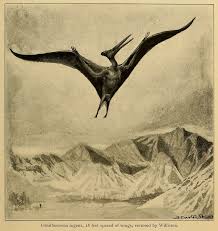
Paleontology is the study of history of life on Earth, with the help of fossils. Paleontology is not the study. of entire species of living things on earth with the help of fossils. 
Paleontologists are scientists. investigate past life on earth or prehistoric life. The duties and responsibilities of a paleontologist vary depending on the field of work and the setting.

Nature of Work:

Study fossils of animals with backbones are called vertebrate paleontologists. Paleontologists who study of fossils of animals without backbones are known as Invertebrate Paleontologists. Microfossils are tiny fossils, either plants or animals, which can be seen only with a microscope- Micro paleontologists

Personality:

Paleontology is a difficult job that requires lot of outdoor work for locating and excavating fossils, an aspirant must have patients. Paleontologist must have high curiosity level and great imagination.

Professional Courses:

Duration: 
2 to 3 years

Eligibility:
Paleontology require a master's degree in geology or earth science.

Career Prospects /Companies:
Paleontology. Careers that you may wish to pursue in paleontology range from curators or other museum personnel within the field, nature or environmental conservationists, geological surveyors within an industry such as mining or the petroleum industry, professional consultancy work or teaching.

Remuneration:

Between 15000/- to 25000/- per month

Wednesday, 22 March 2017

Environmental Science


Environmental Science

Introduction: 

Environmental Science is a study of the environment (surrounding) in chemical, biological and physical context. It is also a higher study of pollution, energy conservation, climatic changes, plastic menace, biodiversity and global warming. Environmental Science is a combination of both social science and natural science. A person who specializes in this subject is known as the environmentalist. He is concerned with the problems of the environment and the effects of unrestrained pollution on the earth’s environment.

Environmental Scientists work is to understand the earth processes such as pollution control, managing of natural resources, comprehensive climate changes and evaluating other energy systems. Presently, the environment engineering and science have been developed into an interesting and highly attractive career option.

Nature of work:

Environmental engineers strive to solve environmental problems such as water and air pollution, waste disposal, and public health issues. As engineers, they use advanced principles of biology, chemistry, and environmental science to protect wildlife and natural resources as well as human life.

Environmental engineers are qualified to work on a variety of serious environmental issues. For example, they can design municipal water supply and industrial wastewater treatment systems; assess recycling and reclamation processes; conduct hazardous-waste management studies, and consult on the environmental effects of various construction projects. They may be required to inspect and evaluate industrial and municipal facilities and programs to assess their compliance with environmental regulations. They may work with environmental scientists, planners, hazardous waste technicians, engineers, and other specialists to address environmental problems.

Personality:

Imagination: 
Environmental engineers sometimes have to design systems that will be part of larger ones. They must be able to foresee how the proposed designs will interact with other components of the larger system, including the workers, machinery, and equipment, as well as the environment.

Interpersonal skills:
Environmental engineers must be able to work with others toward a common goal. They usually work with engineers and scientists who design other systems and with the technicians and mechanics that put the designs into practice.

Problem-solving skills:
When designing facilities and processes, environmental engineers strive to solve several issues at once, from workers’ safety to environmental protection. They must be able to identify and anticipate problems in order to prevent losses for their employers, safeguard workers’ health, and mitigate environmental damage.

Reading skills:
Environmental engineers often work with business people, lawyers, and other professionals outside their field. They frequently are required to read and understand documents with topics outside their scope of training.

Writing skills:
Environmental engineers must be able to write clearly so that others without their specific training can understand their plans, proposals, specifications, findings, and other documents.

Professional courses, Duration and Eligibility Criteria: 

List of Courses:
  • Certificate in Environmental Studies (CES) 
  • Certificate Courses in Environmental Science 
  • Diploma in Environmental Law 
  • Diploma Courses in Environmental Science 
  • Diploma Course in Environment Protection 
  • Bachelor of Environmental Management 
  • Bachelor of Science in Environmental Science 
  • Bachelor of Science in Environmental Science & water Management 
  • Master of Science in Environmental Management 
  • Master of Philosophy in Environmental Biology 
  • Master of Philosophy in Environmental Sciences 
  • Post Graduate Diploma in Environment 
  • Post Graduate Diploma in Environment & Sustainable Development 
  • Doctor of Philosophy in Earth Science 
  • Doctor of Philosophy in Environmental Science


Eligibility Criteria: 

UG: 
For admission into bachelor’s degree, the candidate must have passed the higher secondary school certificate (10+2) examination with science subject such as (biology, maths, and chemistry). The duration for this course is 3 years.

PG: 
The eligibility criteria for pursuing a master’s degree are holding a bachelor's degree with science subjects such as (biology, maths, and chemistry). The duration for this course is 2 years.

Career Prospects: 

There are many career options in the field of environmental science. The job opportunities in this particular area in the private and government organizations, as well as industries, are increasing due to the growing industrialization and realization to check the pollution levels. The global organizations engaged in pollution control and sustainable growth is offering attractive compensation to the fresh graduates.

Professionals in this career can also opt for teaching jobs in universities and colleges. Environmental scientists are engaged in research activities in private and public sector institutions. Many graduates are employed in media sector as environmental journalists.

Some job types:
  • Lecturer 
  • Research Fellow 
  • Research Assistant 
  • Wildlife Filmmaker 
  • Environment Journalists 
  • Forest Carbon Specialist 
  • Conservation Hydrologist 
  • Senior Programme Officer 
  • Environment Photographer 
  • Director of Waste Management 
  • Senior Catastrophe Risk Modeller


Remuneration: 

Scientists who are working in government sector can start earning in the range of Rs. 12,000 to Rs 18,000 per month. Candidates with a postgraduate degree can earn initially within the range of Rs. 35000 to Rs. 50000 and those with a Ph.D. degree can earn in between Rs. 50000 - Rs. 75000. A licensed engineer can expect a salary of Rs.1 lakh per month.

Thursday, 16 March 2017

Forestry/Wildlife


Forestry/Wildlife

Introduction:

Forestry is the science of the development and care of forests; the management of growing timber.
Forestry or forest management is considered as both independent scientific branch and practical field, containing many aspects of forestry, which formulates synthetic conclusions indicating the main directions of management. It is engaged in the formation of the relation between nature and the man on the basis of knowledge of forest state, demand society for forest functions as well as scientific achievements and experience in solving the problems of running and organic structure of the forest.

Issues like global warming, deforestation, global climatic change, water scarcity, natural disasters, etc., are all related to the effective and controlled use of forest wealth. With 175 million hectares constituting wasteland and another 110 million hectare forming severely degraded land in India, the need of the hour is to rejuvenate it through forestry-related programs. The profession of forestry has experienced rapid and perceptible changes in the last years. What used to be considered as a business and a responsibility of the local villagers has turned into a field of global concern where the preservation and conservation of biodiversity play the main role.

"The study of nature has no beginning and it has no end," Jim Corbett had said in Jungle Lore. And the forests of our country provide an opportunity to spend a lifetime in admiring nature and make a living at the same time. In the remote areas of India, where a sizable proportion of the population depends on forests, directly or indirectly for the raw materials, employment and other daily needs, forestry is the main source of employment. In these areas appropriate steps are undertaken towards energy conservation, proper utilization of wastelands and goods and services are also produced.

Nature of work:

Forester takes care of forest resources by protecting them from fire, pests, disease, encroachment and indiscriminate felling of trees. Their tasks typically involve: 

  • They advise clients on good forestry practices 
  • They advising woodland owners on planting design and species choice, budgeting, public access, ecological surveys, and forest certification; 
  • They are entrusted with the task of organizing the growing, harvesting, marketing and sale of timber;
  • Annual work programs are planned and implemented by them and they ensure the effective use of resources to meet the current objectives of the forest area; 
  • They supervising forest workers and contractors in the field 
  • They help in wasteland development 
  • They contact the customers, landowners, timber merchants, the public and local authorities 
  • Liaising with and working on many projects with other professionals, such as landscape architects, biologists, surveyors and engineers, and charitable bodies 
  • They have to attend meetings of professional bodies  Keeping up to date with legal changes and other developments; 
  • Budgets are planned and controlled by them and they prepare costing and financial forecasts 
  • Forest managers/foresters are also involved in forest protection, which is a wide-ranging part of the role reflecting the government's desire to promote sustainable forest management. This includes: 
  • Conducting research in areas such tree improvement and entomology; 
  • Monitoring existing forestry practices; 
  • Protecting forests from illegal felling, pests and diseases;
  • Ensuring that the presence of forests does not affect the surrounding environment and wildlife by damaging wildlife habitats, water supplies or soil. They help in promoting eco-tourism.
Personality:

Following are the personal attributes required to be a forester 

  • Liking for outdoors, 
  • Spirit of adventure, good health,
  • Stamina and physical fitness, 
  • Patience, scientific temperament, 
  • Organizing ability, 
  • Public relations skills,
  • Practicality, courage, 
  • Decision-making ability,
  • Capacity to work long hours, 
  • A genuine interest in the preservation of the natural environment and habitat, 
  • Inclination for research and academic bent of mind, 
  • Curiosity and excellent skills of observation, 
  • Interest in agriculture and geography.
Professional courses, Duration and Eligibility Criteria:

  • B.Sc. Forestry requires 10+2 Science with Physics, Chemistry, Biology and/or Mathematics.
  • M.Sc. Forestry in specializations such as Forest Management, Commercial Forestry, Forest Economics, Wood Science & Technology, Wildlife Science, and Veterinary Science requires B.Sc. Forestry or a graduate degree in related fields.
  • Post-graduates for Forestry or related Master programs may go for Ph.D. and/or research.
Open universities such as the Indira Gandhi National Open University offer diploma and certificate courses in Forestry.

Courses:

  • B.Sc. Forestry
  • M.Sc. Forestry
  • B.Sc. Wildlife
  • M.Sc. Wildlife
  • M.Sc. Wood Science & Tech.
Career Prospects:

After achieving a bachelor’s degree in botany, an individual can work as a biological technician, whereas a post graduate degree holder in botany makes him/her eligible for choosing a career in teaching or to take up research work in any well-known university.

Moreover, one can join any reputed organization as plant explorers, conservationists, ecologists, environment consultants, horticulturist, plant biochemist, nursery manager, genetics, molecular biologist, taxonomist, plant pathologist, environmental consultant and farming consultant.

Few job titles:

  • Mycologist
  • Administrators
  • Ecologist
  • Fruit Growers
  • Plant Biochemist
  • Forester
  • Researchers

Few job sectors:

  • Biotechnology Firms
  • Seed And Nursery Companies
  • Plant Resources Laboratory
  • Educational Institutions
  • Plant Health Inspection Services
  • Oil Industry
  • Arboretum
  • Forest Services
  • Land Management Agencies
  • National Parks
  • Chemical Industry
  • Food Companies
  • Biological Supply Houses

Remuneration:

  • Rs. 10000 plus from NGO or private organizations
  • Rs. 4575 – Rs. 8000 for government positions
  • Rs. 15000 – Rs. 20,000 for researchers, Ethnologists, Entomologists, Silviculturistsis, Forest Range Officers, and Zoo curators etc.

Forensic Science


Forensic Science 

Introduction: 
Forensic Science, the 6th fastest growing career path in the world, is the implementation of scientific principles to succor or nullify the physical evidence found at a crime scene. In simple terms, forensic science technicians’ assists criminal investigations for law enforcement. It is the application of Biology, Chemistry, Engineering, Physics, and Computer Science with the law in the criminal justice system. Forensic Science being a broad field is encircled with a number of specialties having the foundation in natural sciences. Forensic science is further organized into the following fields:
  • Forensic Optometry 
  • Forensic Toxicology 
  • Forensic DNA Analysis 
  • Digital Forensics 
  • Forensic Entomology 
  • Forensic Geology 
  • Trace Evidence Analysis 
  • Criminalistics 
  • Forensic Odontology 
  • Forensic Engineering etc.
Even more specialized fields in Forensic science include forensic accounting, forensic engineering, and forensic psychiatry, among others.

Nature of work: 
A forensic scientist plays an important part in proving the executor of a crime or the relation of crime to the perpetrator by the analysis of physical evidence, interpretation of data, DNA fingerprinting etc. In many civil and criminal cases, the statement of a forensic scientist plays a fundamental part in law enforcements.

Forensic scientists may be classified as Forensic Pathologists, Forensic Scientists, and Associated Scientists. Criminalists or Crime scene investigators are forensic science technicians’ who travel to the crime scene to gather the evidence by them and executes forensic analysis in a laboratory.

On the other hand, Forensic Pathologists who are specialized to work in laboratories analyzes the evidence being brought to them from the crime scene. Associated Scientists applies their understanding to the forensic science which provides the investigators with pivotal information starting from minor bite marks to a major observation on the postmortem body. 
A few job roles of a forensic scientist are listed below:
  • Criminalist 
  • Forensic Odontologist 
  • Forensic Chemist 
  • DNA Analyst 
  • Medical Examiner 
  • Trace Evidence Analyst 
  • Forensic Anthropologist 
  • Forensic Pathologist 
  • Fingerprint Examiner 
  • Forensic Toxicologist 
  • Forensic Botanist 
  • Forensic Biologist
Personality: 

Legal Process 
Forensic science technicians must have a complete understanding of the role of forensic science within the law. Forensic science is a key component in prosecuting many crimes, so technicians must know how to collect evidence properly so it is not contaminated. They must also understand their state's regulations for transferring evidence so that all of the paperwork is handled properly when giving processed evidence to the police detectives or attorneys.

Processing Crime Scenes 
Forensic science technicians must be meticulous when collecting evidence and documenting a crime scene. Technicians must identify and document each piece of evidence and its specific location at the crime scene. They take photographs and make sketches of the crime scene. In addition, they must look for less-obvious evidence such as finger prints, bodily fluids and bullets and shell casings that may be lodged in a wall or hidden under furniture. Technicians must pay close attention to detail and maintain their composure, even when confronted with difficult or gruesome crime scenes.

Laboratory Equipment 
Forensic science technicians must be skilled in using laboratory equipment. For example, they use microscopes to examine evidence such as hair, fibers and bullets. They use lab equipment to extract DNA from blood collected at the scene. In addition, technicians must be skilled at using computers to input data and to use databases to compare DNA, fingerprints and ballistics data.

Critical Thinking 
Forensic science technicians walk away from a crime scene with many pieces of evidence that may include photographs of blood splatter, fingerprints, footprints, blood samples and shell casings. At the lab, technicians not only analyze each piece of evidence individually, they must then put all of that data together to form a picture of what happened at the crime scene. They answer questions such as where the attacker was standing relative to the victim and how the criminal entered the building.

Communication 
Forensic science technicians must be able to communicate clearly. During the course of an investigation, they may need to consult with experts in other fields. For example, if a poison is found in a blood sample, they may need to consult with a toxicologist to determine how that poison would have affected the victim. In addition, they must clearly explain their findings to detectives or investigators. In some cases, they may appear as witnesses at a trial and must explain to a judge and jury how evidence was collected and processed and what the evidence shows about the crime.

Professional courses, Duration and Eligibility Criteria: 
  • Diploma in Forensic Science 
  • B.Sc. in Forensic Science 
  • M.Sc. in Forensic Science 
  • M.Sc. in Digital Forensics & Information Security 
  • M.Sc. in Forensic Odontology 
  • MBA Finance with specialization in Forensic accounting 
  • PG Diploma in Forensic Document Examination 
  • PG Diploma in Fingerprint Science 
  • PG Diploma in Forensic Management 
  • PG Diploma in Forensic Accounting 
  • Post Basic Diploma in Forensic Nursing

Eligibility Criteria: 
  • For Diploma Program: Candidates should have 10th passed in any discipline from recognized Board/ School/ College. 
  • For B.Sc. in Forensic Science Program: The minimum qualification required to apply is a pass in the 10+2 examination in Science from PUC/ ISC/ CBSE or equivalent board with Physics, Chemistry, and Biology as core subjects.
  • For PG Programs: The eligibility criteria for pursuing a master’s degree is a bachelor’s degree in Science/ Forensic Science/ Medicine/ Engineering/ Pharmacy with minimum 55% (50% in case of SC/ST) marks or equivalent. 
  • For PGD Programs: Candidates should have graduation in any discipline from Indian recognized School or University.

Duration: 
  • Undergraduate Course (3 years) 
  • Post Graduate Courses (2 years) 
  • Doctoral Course (3 years)

Career Prospects: 
Forensic Scientists are in high demand around the world. In this era, there are numerous job opportunities for forensic scientists in both Government and Private sectors such as Police, Crime Branches, Defense/Army, Investigation Bureau, Detective Agencies, and Narcotics Department etc. Forensic scientists may also work with local, federal or state law enforcement agencies, private laboratories etc.

Remuneration: 
An average salary for a graduate at state forensic sector will be as per government pay scale which will start around Rs. 4000/- and accelerates along with the rank and years of experience. With a postgraduate qualification, one can earn sky-high salaries depending upon the nature of the organization. Private firms offer a rewarding pay packages to scientists to scientists with a few years of experience. With adequate experience, professionals earn Rs. 50, 000/- to Rs. 60,000/- a month depending on the nature of the case.
 
Copyright © 2017 Infomatica Blog. Designed by Ekeeda